
Exhibitions in the UAE are highly competitive. Whether you are participating in a trade show in Dubai or showcasing your brand at an event in Sharjah, your exhibition stand plays a major role in attracting visitors and generating leads. Choosing the right exhibition stand builders in UAE can make the difference between a successful event and a wasted investment.
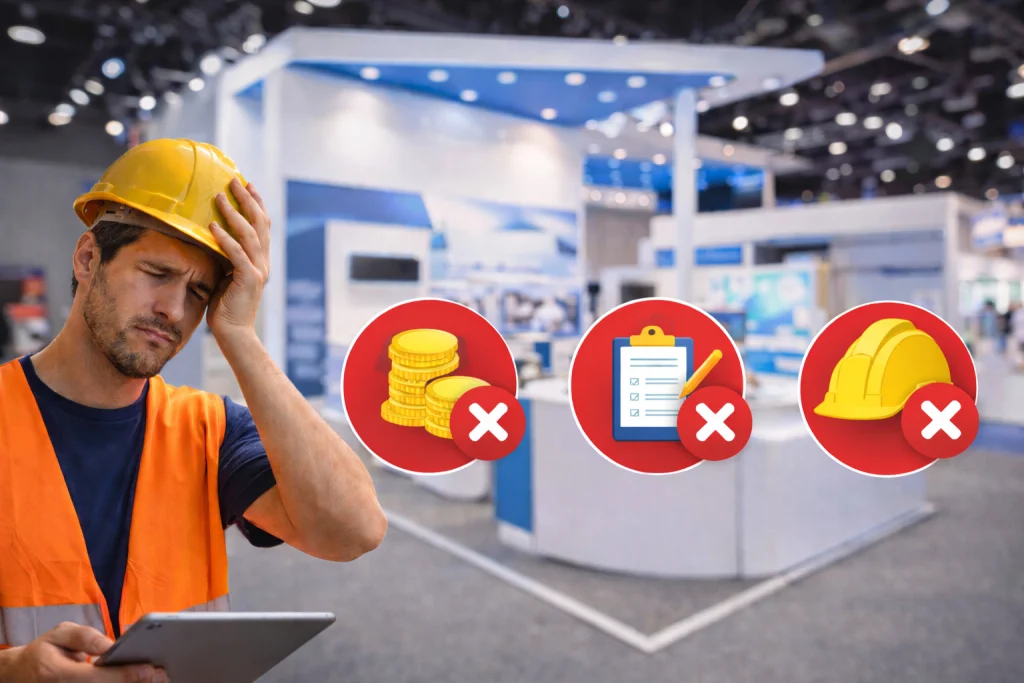
Many businesses rush the selection process and later face delays, poor quality, or weak visitor engagement. To help you avoid costly mistakes, here are the most common errors companies make when hiring exhibition stand builders in Dubai and across the UAE.
1. Choosing Based on Price Alone
Budget is important, but selecting the lowest quote can lead to bigger problems later. Some builders reduce costs by:
Using low-quality materials
Cutting corners in finishing
Limiting customization options
Offering limited on-site support
A poorly built stand can damage your brand image. Instead of focusing only on price, compare value. Look at design quality, material standards, project management, and post-installation support.
2. Not Checking Experience in the UAE Market
Exhibition stand building in Sharjah and Dubai requires local knowledge. Each venue has its own regulations, height limits, safety standards, and approval procedures.
Experienced exhibition stand builders in Dubai understand:
Venue guidelines
Municipality approvals
Installation timelines
Electrical and safety compliance
Hiring a builder without UAE experience can result in delays, last-minute changes, or even stand rejection by event authorities.
3. Ignoring Portfolio and Past Projects
Before finalizing any exhibition stand UAE partner, review their previous work carefully.
Ask for:
Photos of completed projects
Case studies
Industry-specific experience
Client testimonials
A strong portfolio shows design capability and execution quality. If a company cannot provide real examples of past exhibition stand building projects, that is a warning sign.
4. Overlooking Custom Design Capabilities
Many businesses accept template-based designs to save time. However, generic designs fail to capture attention in busy exhibition halls.
Your exhibition stand should:
Reflect your brand identity
Highlight key products or services
Encourage visitor interaction
Stand out visually from competitors
Professional exhibition stand builders in UAE will first understand your brand goals before proposing a concept. Customization is not an extra feature—it is essential for better results.
5. Poor Planning and Timeline Management
Exhibition projects are time-sensitive. Delays in design approval, production, or installation can cause serious issues.
Common planning mistakes include:
Late design confirmation
Unclear project timelines
No on-site supervision
Poor coordination with event organizers
Reliable exhibition stand builders in Dubai provide clear schedules and maintain regular communication throughout the project.
6. Ignoring Structural and Technical Quality
An exhibition stand must not only look good but also be safe and durable.
Pay attention to:
Stability of structure
Lighting setup
Electrical safety
Material strength
Finishing quality
A weak structure or faulty lighting can create safety risks and negatively affect your brand image. Proper exhibition stand building in Sharjah and Dubai requires technical precision.
7. Lack of Clear Communication
Miscommunication leads to misunderstandings in design, layout, and final execution. Always ensure:
Written agreements
Clear design approvals
Defined scope of work
Transparent costing
Strong communication between your team and the exhibition stand builders in UAE reduces unexpected issues during installation.
8. Not Considering Post-Event Support
Many companies forget to discuss dismantling, storage, or reuse options.
Ask your exhibition stand builder:
Do you handle dismantling?
Can the stand be reused for future exhibitions?
Do you offer storage solutions?
Modular or reusable stands can reduce long-term costs and improve ROI.
9. Skipping Pre-Event Testing
Before the exhibition opens, everything should be tested.
Important checks include:
Electrical testing
LED and display testing
Structural inspection
Branding alignment
Pre-event testing ensures your exhibition stand UAE setup works perfectly on event day.
10. Not Defining Clear Objectives
Some businesses focus only on design but forget the purpose of participation.
Before hiring exhibition stand builders in Dubai, define:
Are you launching a product?
Are you collecting leads?
Are you increasing brand awareness?
Are you targeting partnerships?
Your stand design should support your event objectives. Clear goals lead to better design decisions.
Final Thoughts
Hiring the right exhibition stand builders in UAE is a strategic decision. Avoiding these common mistakes can save time, reduce costs, and improve your exhibition performance.
The best exhibition stand building approach combines:
Strong design expertise
Local regulatory knowledge
High-quality materials
Clear project management
Transparent communication
Whether you need exhibition stand building in Sharjah or Dubai, choosing a reliable and experienced team ensures your brand stands out in a competitive exhibition environment.
Frequently Asked Questions (FAQs)
1. How much does exhibition stand building cost in UAE?
Costs vary depending on stand size, design complexity, materials, and location. Custom exhibition stands typically cost more than modular designs.
2. How long does it take to build an exhibition stand in Dubai?
The timeline depends on design approval and complexity. On average, it may take 2–6 weeks from concept to installation.
3. What is the difference between custom and modular exhibition stands?
Custom stands are fully designed for your brand and event goals. Modular stands use reusable structures that can be adapted for different exhibitions.
4. Is local approval required for exhibition stand building in Sharjah?
Yes, most venues require design approval and compliance with safety regulations before installation.
5. How do I choose reliable exhibition stand builders in Dubai?
Check experience, portfolio, communication process, technical expertise, and past client feedback before making a decision.